Image: AI-generated illustration
The Dyatlov Pass Mystery: 9 Hikers, 1 Night, No Explanation
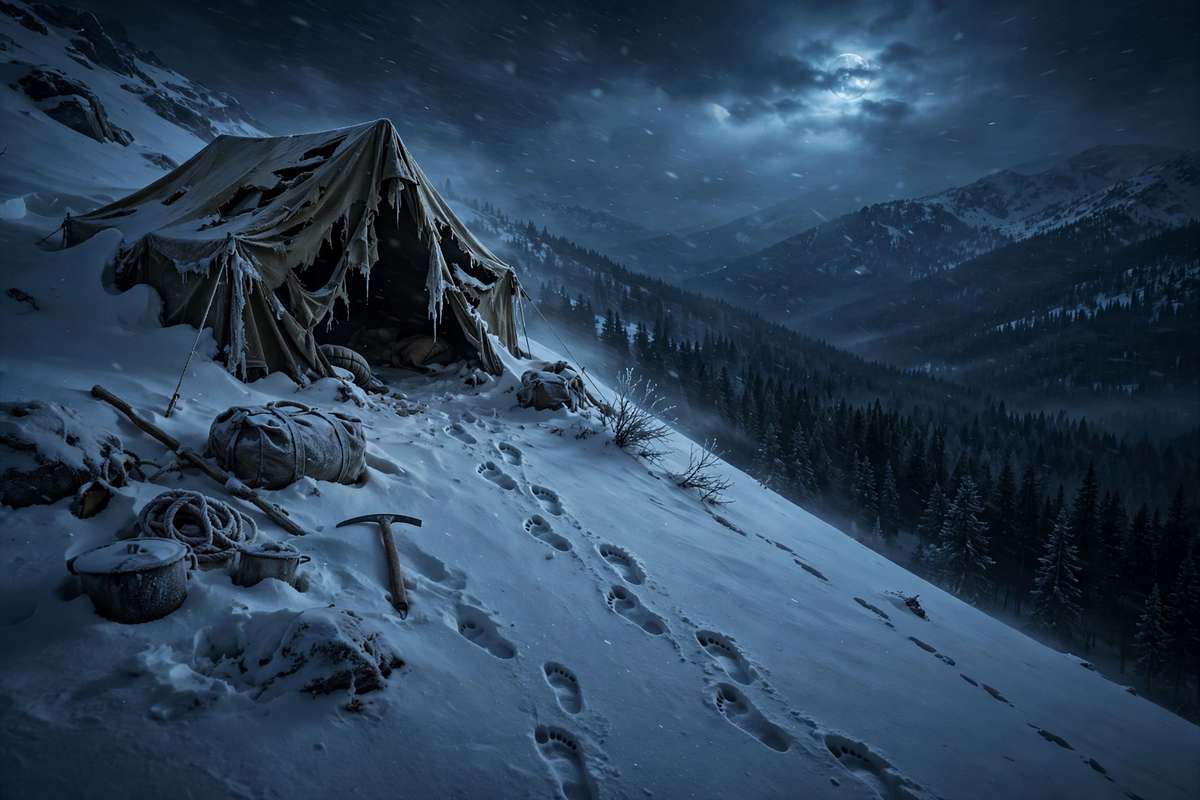
On February 26, 1959, a rescue team trudged through waist-deep snow in the northern Ural Mountains and found something that has haunted investigators ever since: a large canvas tent, half-buried in snow, its fabric slashed open from the inside. Everything the campers owned was still there — boots, food, warm clothing, a stove. The nine people who had slept in that tent were gone.
They had been missing for three weeks. None of them would ever be found alive.
The Expedition
The group was made up of ten experienced hikers from the Ural Polytechnical Institute in Yekaterinburg, led by 23-year-old engineering student Igor Dyatlov. In late January 1959, they set out on a Category III ski expedition — the hardest rating — a 200-mile trek through the frozen wilderness toward Mount Otorten.
One member, Yuri Yudin, developed severe joint pain and turned back on January 28. He never saw his classmates again. He became the only survivor of the Dyatlov group — a man who lived because his knees gave out.
The remaining nine made camp on February 1 on the eastern slope of Kholat Syakhl. In the language of the region’s Indigenous Mansi people, the mountain’s name can be translated as “Dead Mountain.”
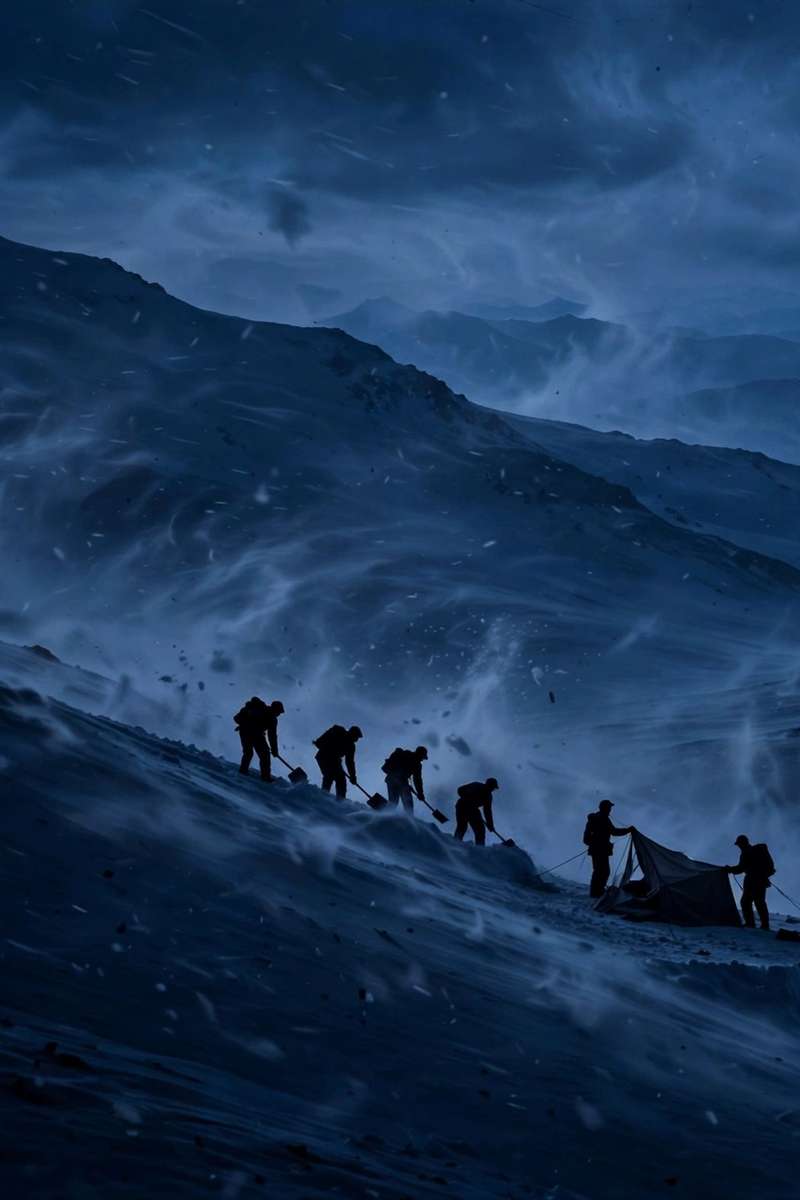
Illustration: AI-generated
The Tent
When searchers reached the campsite, the scene made no sense. The tent had been cut open from the inside with knives. The hikers had fled into the night wearing almost nothing — some in socks, some barefoot — in temperatures as low as minus 40 degrees Celsius.
A line of footprints led away from the tent, downhill toward a forest more than a kilometre away. The prints showed people walking, not running, in an orderly line. Then the trail vanished into the dark.
Illustration: AI-generated
The next day, searchers found the first two bodies beneath a tall cedar tree at the edge of the forest. The men were wearing only socks and underwear. Nearby, the remains of a small fire. Three more bodies, including Dyatlov himself, were found between the cedar and the tent — as if they had died trying to crawl back to camp.
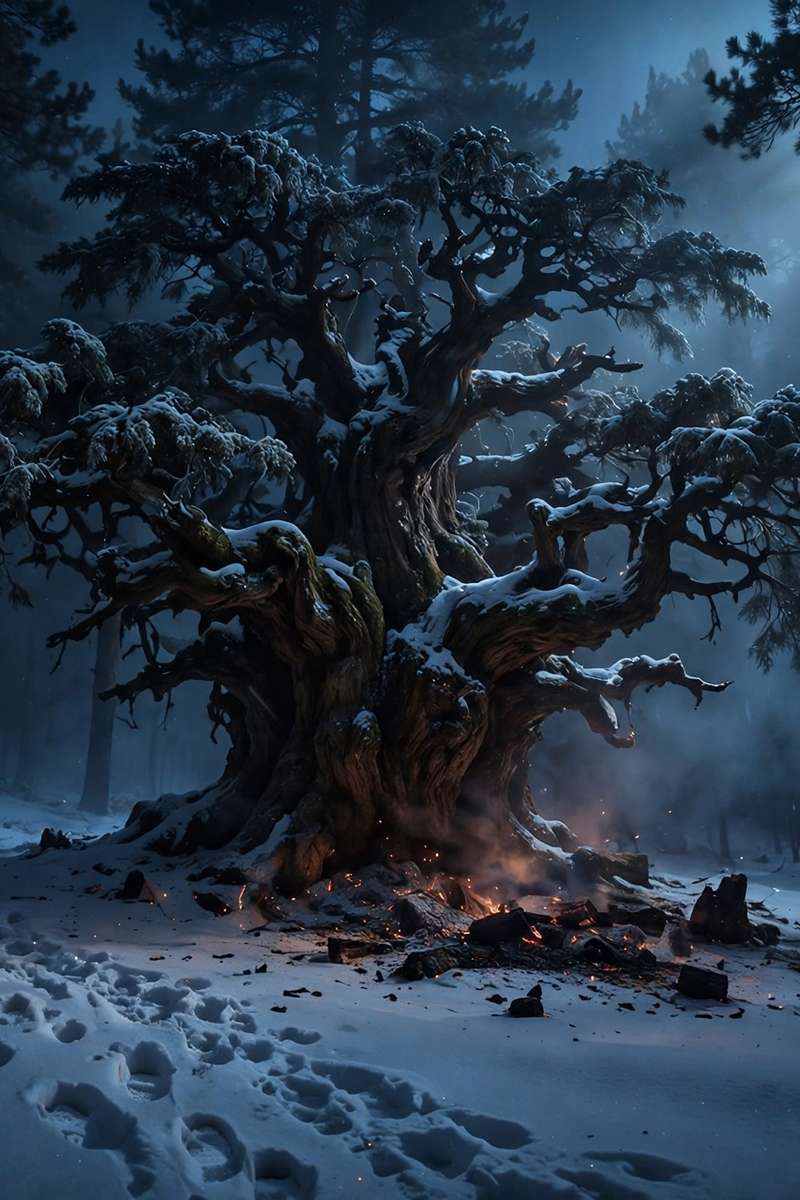
Illustration: AI-generated
The Ravine
The last four bodies were not found until May, when the spring thaw finally released them from a ravine beneath deep snow. And these were the bodies that turned a tragedy into a mystery that has never been solved.
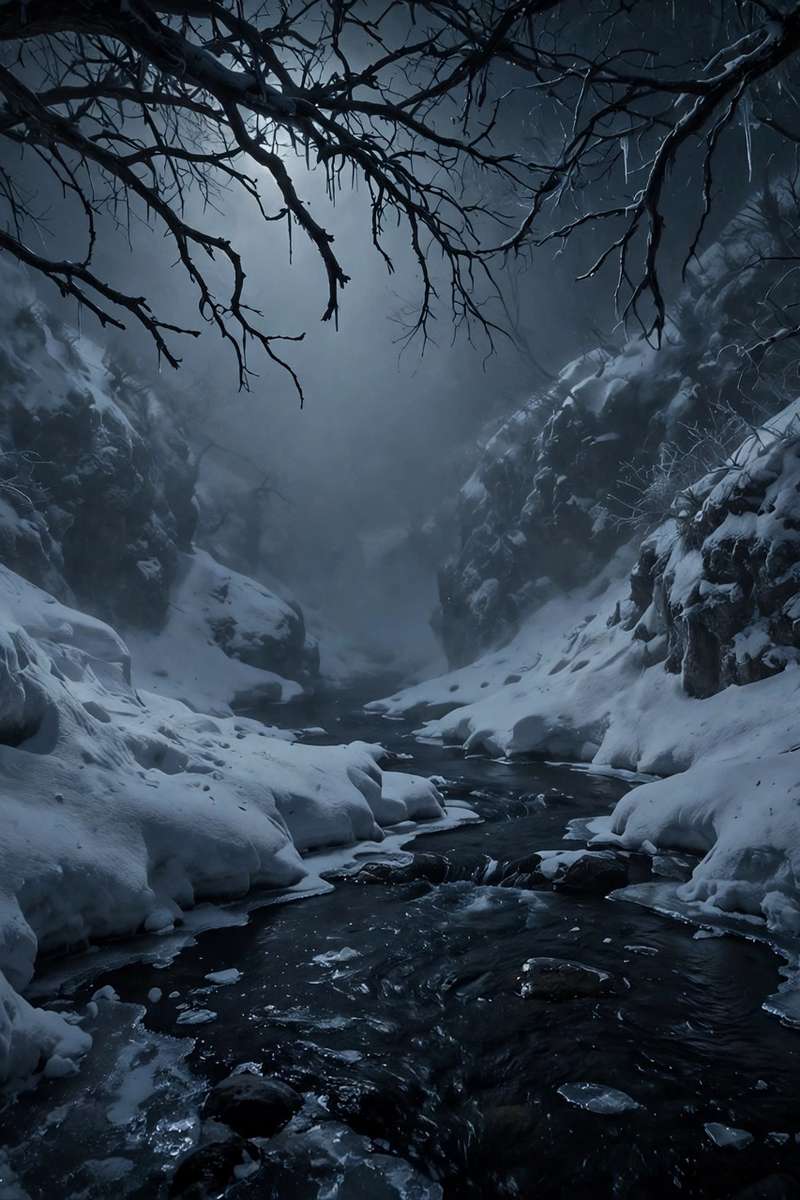
Illustration: AI-generated
Two of the four had suffered massive chest trauma — ribs fractured with a force investigators compared to a car crash. One had a fractured skull. Two were missing their eyes. One was missing her tongue. One was missing his eyebrows. Some of their clothing showed traces of radioactivity.
Six of the nine died of hypothermia. The other three died of physical trauma. But nothing in the official record could explain how experienced hikers, in the middle of the night, ended up with injuries like that — or why they had cut their way out of their own shelter and fled half-naked into a blizzard.
The Official Answer
The Soviet investigation closed the case after three months. Its conclusion, in the dry language of bureaucracy, was that the hikers had died because of “a compelling natural force.” No further detail. The case files were classified, and the mountain kept its silence for decades.
In 2019, Russian authorities reopened the investigation and concluded in 2020 that an avalanche was the most likely cause. In 2021, researchers from EPFL and ETH Zurich published a study in Nature Communications showing that a rare type of avalanche — a slab avalanche — could explain the crushing chest and skull injuries, using computer simulations based in part on car-crash research and animation techniques from the film Frozen.
It is the best scientific explanation ever offered. And it still does not answer the questions that matter most.
The Questions That Won’t Die
If an avalanche struck the tent, why were there no clear signs of avalanche debris when rescuers arrived 26 days later? Why did the hikers cut their way out instead of using the tent’s entrance? Why did they walk — not run — away from the camp, and why did some of them take off their clothes in the freezing cold, a phenomenon known as paradoxical undressing that happens in the final stages of hypothermia?
And what about the rest: the missing eyes and tongue, the radioactivity on the clothing, the reports of glowing orange spheres in the sky that night?
Over the decades, the theories have multiplied. A slab avalanche. Katabatic winds — sudden, violent gusts funnelling down the mountain — slamming into the tent. Infrasound, low-frequency sound waves that can induce panic. A military weapons test gone wrong. A Yeti. A UFO. Each theory explains a few of the facts. None of them explains all of them.
Why We Can’t Let It Go
The Dyatlov Pass incident endures because it is a perfect mystery: nine skilled, rational people, a single night, a set of clues that refuse to fit together. There was no crime scene in the usual sense — no weapon, no suspect, no motive. Only a torn tent, a line of footprints in the snow, and nine lives that ended in ways nobody can fully explain.
The mountain is still there. The tent is gone, the footprints melted long ago, and the hikers’ diaries and camera film — the last photographs show the group cutting the snow slope to pitch their tent, hours before they died — are all that remain of their final day.
Science may one day close the case for good. Until then, the Dyatlov Pass remains what it has been for 67 years: a riddle written in snow, in the dark, on a mountain whose name means death.
What do you think happened that night — avalanche, or something else?